


Astro Arena : 3vs3 Battle PvP
4.6745.00 Reviews
App Specs
- Version
- 1.0
- Updated On
- License
- Free
- Downloads
- 1,000,000+
- Developer
- KRAFTON, Inc.
- Categories
- Action
- Platform
- Android
Screenshots

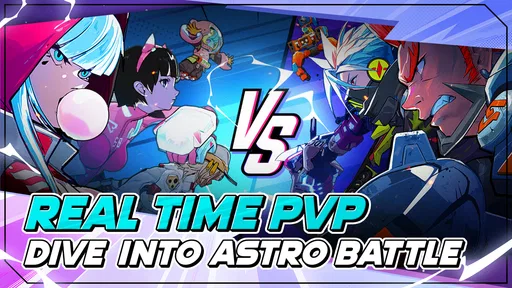
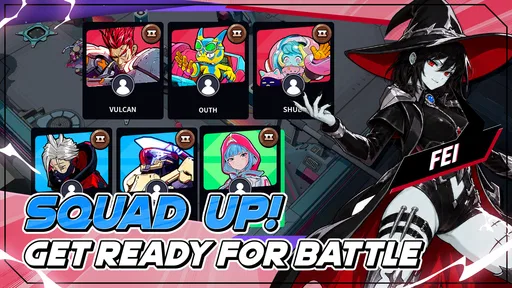
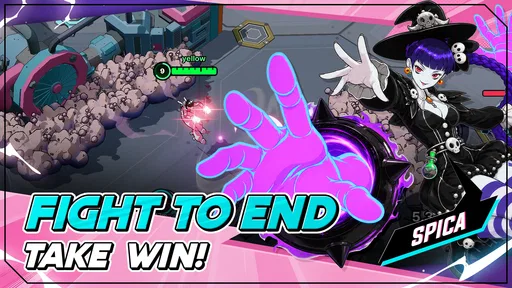


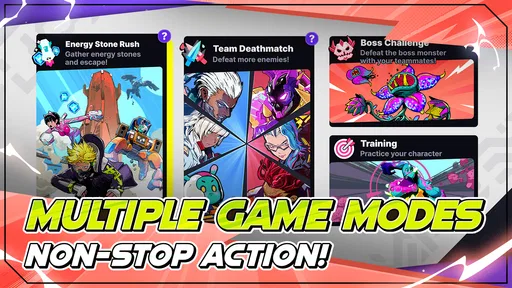
 Analysis by AppCompare
Astro Arena caught my attention because it aims to make competitive multiplayer feel manageable rather than overwhelming. This is an action game built around three-versus-three PvP, and its short-match identity makes it easy to try when I have only a few minutes. I do not need to reserve an entire evening for a session, which gives it an immediate advantage over larger multiplayer games that demand more time and concentration.
After spending time with it, my opinion is positive but measured. The quick format creates a satisfying first-week rhythm, especially when I want a burst of competition without committing to a long match. The harder question is whether that rhythm remains interesting after the novelty fades. For me, the answer depends on how much I enjoy repeating compact battles, learning from losses, and accepting that a team-based game can be affected by people I do not control.
Why the first sessions are so easy to enjoy
The clearest strength is the low time commitment. A short PvP match is easier to fit between ordinary tasks than a traditional battle arena session. I can play during a break, after finishing a small chore, or while waiting for an appointment without worrying that I will have to abandon a large unfinished match. That convenience is not just a marketing point; it changes how often I am willing to open the game.
The three-versus-three structure also gives each decision more weight than a chaotic free-for-all. I have to pay attention to what the other players are doing, but the team is small enough that my choices feel visible. Helping a teammate, choosing when to push, or deciding when to avoid a bad fight can matter immediately. That creates a useful middle ground between playing completely alone and trying to coordinate a very large squad.
I found the game most appealing when I treated each battle as a focused exercise rather than a long-term obligation. A short match gives me a clear beginning and ending, so it is easy to say, “I will play one more.” That can be a positive habit when I want a quick mental reset. It can also become a trap if I keep chasing a better result after a frustrating defeat.
The title is free, which lowers the barrier to trying it. The audience rating is Everyone 10+, so it is positioned for a broad group of players rather than only adults. I would still suggest that younger players understand the presence of optional purchases before spending time in the game, since individual items range from $0.29 to $99.99. The free entry point is useful, but it does not automatically mean that every part of the experience is cost-free.
What makes the three-player format matter
In a one-on-one game, a mistake belongs entirely to me. In a three-player team, the emotional experience is different. I can recover from a poor decision if the other two players adapt, and I can also lose momentum because someone else takes an unnecessary risk. That uncertainty gives the matches their tension, but it means the game is not always ideal when I want a perfectly controlled solo experience.
Worth Reading Before You Choose

EA SPORTS FC Mobile 26 Is a Bigger Football Game, but It Takes Time

Flipboard Shows What News Apps Must Do Beyond the Feed

Switching to Android Auto Means Rethinking Your Driving Routine

Google Calendar Makes a Crowded Week Easier to Manage

Ludo King Makes the Most of the Minutes Between Plans

Baby Panda World Brings Quick Play to Modern Phones, but Its Game Library Feels Busy
One practical approach is to use the opening moments to observe rather than immediately forcing an attack. In a compact match, players often feel pressure to act quickly, but rushing can leave the team disorganized. I get better results when I first identify whether my teammates prefer aggressive movement or cautious positioning, then adjust enough to support the group. This is a small habit, but it makes the short format feel more strategic.
Another useful habit is to define a personal goal before pressing the play button. Sometimes I focus on staying alive and making reliable decisions. At other times, I use a session to practice responding quickly under pressure. This prevents every match from being judged only by victory or defeat. It also gives losses some value, which is important in a game designed around repeated battles.
Who will enjoy the early experience
I would recommend it first to players who like competitive action but dislike lengthy matches. It is also a reasonable choice for someone who wants a mobile PvP game that can fit around a busy day. The compact team size may appeal to players who find huge multiplayer battles difficult to read, because there are fewer teammates to track and fewer simultaneous decisions competing for attention.
It is less suitable for someone who wants a deep single-player campaign, a slow progression journey, or a relaxed game with no competitive pressure. It is also not the best match for players who become irritated when teammates make unpredictable choices. The short format reduces the time spent in a bad match, but it does not remove the frustration of being on the wrong side of a poorly coordinated team.
The game comes from KRAFTON, Inc., a developer already associated with action-focused multiplayer experiences. That background makes the competitive direction understandable, but I would not choose it simply because of the developer. The real reason to try it is the combination of quick battles and small-team PvP. If those two ideas do not appeal to me, the developer name alone would not change my decision.
Whether the appeal survives beyond the first month
The first week is powered by discovery. I am learning how matches flow, testing different approaches, and finding out whether the short format fits my daily routine. The more important test arrives later, when the basic surprise has disappeared. At that point, the game needs to provide enough variation in decision-making to make another battle feel worthwhile rather than automatic.
For me, recurring value comes from improvement more than from simply accumulating matches. I enjoy the game more when I can identify a mistake, change my approach, and see whether the adjustment works next time. A compact battle structure supports that process because feedback arrives quickly. I do not have to wait through a long session before testing a different way to support the team.
That same speed can create repetition. If every session begins to feel like the same sequence of rushing, reacting, and restarting, the short matches stop feeling convenient and start feeling disposable. The game needs to keep asking different questions of me. If I can solve the usual situations too easily, my interest drops even though the matches remain technically fast.
A realistic everyday routine
Imagine that I have ten free minutes before leaving for work. I can open the game, play a battle, and stop without turning the session into a major event. If the match goes well, I get a small sense of accomplishment. If it goes badly, the limited duration makes it easier to move on than it would be in a longer competitive game.
At lunch, I might play another match, but I would avoid treating it as a serious ranked-style test if I am distracted or surrounded by noise. Team PvP rewards attention, and a short game can still demand quick reactions. The mistake is assuming that a brief match is automatically casual. Its length is convenient, but the competitive decisions can still require concentration.
In the evening, the same game can serve a different purpose. I may play several battles to work on consistency, but I need to set a stopping point. Because each match is short, it is easy to keep extending the session. My most sustainable routine is to stop after I notice that I am playing mechanically or becoming annoyed at teammates. Continuing past that point rarely improves the experience.
How it compares with familiar alternatives
Compared with a larger battle arena game, Astro Arena is easier to fit into a schedule and easier to understand at a glance. A small team creates less visual and social noise, and the short match design makes experimentation less costly. The trade-off is that the experience may feel less expansive than a full-scale alternative with longer battles and more room for gradual strategy.
Compared with a traditional quick arcade action game, it asks more of me socially and tactically. I am not only reacting to opponents; I am also trying to make choices that help two teammates. That can make a good win more satisfying, but it also makes the result less predictable. Someone seeking a purely individual test may prefer an action game where personal performance is not tied so closely to team behavior.
Compared with slower strategy games, it offers faster feedback and less planning time. I can learn through immediate repetition instead of studying a long match. The cost is that players who enjoy careful preparation may find the pace too compressed. The game rewards thinking quickly, not necessarily thinking for a long time.
The maintenance burden of keeping it enjoyable
The game does not demand a complicated personal setup from me, but it does require a little discipline. I need to keep my sessions short enough that the format remains refreshing. I also need to pay attention to how purchases affect my expectations. Since the game is free to start and includes optional items, I would decide in advance whether I am willing to spend anything rather than making an impulsive purchase after a frustrating match.
My most useful maintenance rule is to separate learning sessions from winning sessions. During a learning session, I accept mistakes and focus on one improvement, such as staying with the team or avoiding a bad engagement. During a winning session, I play only while my decisions still feel deliberate. This distinction prevents the game from becoming an endless attempt to repair one disappointing result.
Another practical tip is to avoid playing when I cannot give the match basic attention. A three-player team depends on timing, and joining while distracted can harm both my experience and that of the other players. The short duration makes it tempting to play anywhere, but convenience should not be confused with suitability for every moment.
On the technical side, the current version is 1.0 and requires Android 8.0 or later. That makes the compatibility requirement fairly approachable for many Android users, although anyone with an older phone should check the operating system before planning around the game. I would also keep some patience for an early release, because a new multiplayer title can feel less settled than a long-established alternative even when the core idea is appealing.
Where fatigue begins
The first source of fatigue is repetition. Short matches are excellent when I want a quick burst, but the same strength can expose a limited loop quickly. If the decisions, pacing, and team patterns stop changing, I may feel that I am replaying the same few minutes rather than developing a lasting skill.
The second source is team dependence. A well-coordinated group can make the game feel sharp and rewarding. An uncoordinated group can make my choices feel irrelevant. I can reduce that problem by adapting to teammates instead of demanding that they follow my preferred plan, but I cannot eliminate it. Players who need full control over the outcome should approach the game cautiously.
The third is purchase pressure. Even when I enjoy a free game, the presence of optional items can change how I evaluate progress. I prefer to decide whether the basic loop is satisfying before spending anything. If the game is no longer enjoyable without additional purchases, that is a sign that the underlying habit has weakened for me.
There is also a subtle fatigue that comes from always playing for a result. Competitive games can turn a short break into another performance test. I get more lasting value when I occasionally play with a process goal, such as improving positioning or making fewer impulsive moves. Without that change in mindset, the game can become a cycle of chasing wins rather than a genuinely enjoyable activity.
How the rating and audience affect my expectations
The game holds a 4.6 average from around 42 thousand ratings, with over a million installs. Those figures suggest that the quick competitive concept has reached a substantial audience and that many players find the basic experience appealing. I treat that as a useful signal, not a guarantee that it will suit me, because a strong average cannot predict how I will respond to team play or repetition.
The Everyone 10+ classification also helps set expectations about its intended audience. I would describe it as accessible rather than completely effortless. The rules may be approachable, but competitive success still depends on attention, timing, and learning from mistakes. A younger or newer player may enjoy the short games, while still needing time to understand why certain decisions work better than others.
Who should skip it
I would skip it if my main requirement is a substantial offline adventure or a game that respects long periods of uninterrupted play. The design is centered on repeated PvP matches, so it is not the right substitute for a story-driven action title. I would also skip it if I dislike relying on teammates or if I tend to spend money impulsively in free-to-play games.
I would be cautious if my phone is older, my connection is unreliable, or I usually play in situations where concentration is impossible. A quick match does not become enjoyable merely because it is quick. The format works best when I can give it a focused few minutes and accept the competitive uncertainty that comes with a small team.
On the other hand, I would keep it installed if I wanted a compact action game for regular breaks and enjoyed measuring small improvements. Its strongest use is not as an all-day replacement for every other game. It works better as a repeatable, focused option that I can open when I want immediate competition without a long commitment.
My long-term verdict
The real test is not whether Astro Arena can fill five minutes; it is whether those five minutes still feel meaningful after the novelty has gone. In my experience, it has a credible chance because three-versus-three play gives individual decisions a team context, while the short structure makes practice convenient. I can imagine returning to it regularly when I want a quick challenge and have a clear reason for playing.
Its lasting value is more conditional than its first impression. I need variety in my own goals, sensible limits on session length, and enough patience to work with unpredictable teammates. Without those habits, the game risks becoming repetitive or turning every break into a frustrating rematch. The free price makes trying it easy, but I would not spend money until the basic loop has earned a place in my routine.
Overall, I recommend it to Android players who want fast team-based action and are comfortable with the give-and-take of PvP. I would choose a larger battle arena game for deeper, longer strategic sessions, and a solo action game for complete control. For quick competitive play, though, this is a focused option from KRAFTON, Inc. that deserves a trial. My final recommendation is to install it, play with a specific improvement in mind, and keep it only if the matches continue to feel engaging after the first burst of excitement.
Pros
- Quick 3v3 matches are ideal for short gaming sessions.
- Different heroes encourage varied team compositions and strategies.
- Real-time PvP creates exciting
- unpredictable battles.
- Bright visuals and clear effects make combat easy to follow.
- Progression systems provide goals beyond individual matches.
Cons
- Matchmaking may feel uneven when experienced players face newcomers.
- A stable internet connection is essential for smooth online battles.
- Some heroes or upgrades may require significant time to unlock.
- Repeated arenas and modes can make the experience feel repetitive.
- Competitive matches can become frustrating during losing streaks.
FAQs for Astro Arena : 3vs3 Battle PvP
What is Astro Arena: 3vs3 Battle PvP?
Astro Arena: 3vs3 Battle PvP is a team-based multiplayer action game focused on short, competitive three-versus-three matches. Players choose a character, use unique abilities, and cooperate with teammates to defeat the opposing squad or complete the match objective. The gameplay is designed around quick decisions, positioning, timing, and coordinated attacks rather than playing entirely alone.
Can I play Astro Arena: 3vs3 Battle PvP offline?
The main appeal of Astro Arena: 3vs3 Battle PvP is its online PvP experience, so an internet connection is generally required for matchmaking and live battles. Offline access may be limited to menus, tutorials, or other available noncompetitive sections, depending on the version installed. A stable Wi-Fi or mobile-data connection is recommended to reduce lag and avoid disconnections during matches.
Is Astro Arena: 3vs3 Battle PvP free to download and play?
Astro Arena: 3vs3 Battle PvP can be downloaded and played without an upfront purchase, but free-to-play games commonly include optional in-app purchases. These may involve cosmetic items, progression resources, character-related content, or other bonuses. Players should review the store listing and the payment settings on their device, especially if children may access the game, because purchases can affect the overall experience.
Does the game support multiplayer with friends?
Yes, the team-focused design of Astro Arena: 3vs3 Battle PvP makes playing with friends one of its most appealing features. Depending on the current version and available modes, players may be able to invite friends, form a team, or join matches together. Team communication and choosing complementary characters can make a noticeable difference, although matchmaking may still place your group against unfamiliar opponents.
What device and account requirements should I know before downloading?
Before installing Astro Arena: 3vs3 Battle PvP, check the official Google Play or App Store listing for the latest operating-system, storage, and compatibility requirements, since these can change with updates. The game may also require additional files after installation and an account or platform connection for online progress. Using a reasonably modern device is advisable for smoother graphics, faster loading, and more stable performance.


